Trusted By
Long Island Residents

Dr. Salvatore Zavarella is a distinguished board-certified Long Island neurosurgeon with over 15 years of experience. He practices at NeuroCare Long Island, a leading neurological center under the umbrella of Northwell Health. Dr. Zavarella specializes in complex spinal surgeries, minimally invasive neurosurgical techniques, and the treatment of brain tumors. He is renowned for his patient-centric approach, combining advanced medical knowledge with compassionate care.
Patient Profile:
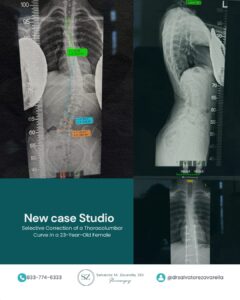
Patient C was first evaluated by Dr. Zavarella at the age of 14 after being referred for scoliosis evaluation. Imaging at the time of the initial consultation revealed a significant primary thoracic curve measuring approximately 50–51 degrees.
Given the patient’s ongoing growth and skeletal development, Dr. Zavarella recommended careful observation and regular follow-up evaluations rather than immediate surgical intervention.
Over the following two to three years, the patient was closely monitored as she completed her final growth period. During this time, the spinal curvature continued to progress. As the curve worsened, the patient began experiencing increasing midline thoracic pain along with lumbar discomfort when sitting for extended periods.
Dr. Zavarella conducted a comprehensive evaluation including:
X-Rays of the Spine: Confirmed progressive thoracic scoliosis with worsening curvature.
Physical Examination: Demonstrated spinal deformity consistent with progressive thoracic scoliosis.
Growth Monitoring: Confirmed that the patient had reached the end of her growth period, making surgical correction an appropriate option.
After a detailed discussion with the patient and her family regarding treatment options, including continued observation versus surgical correction, Dr. Zavarella recommended surgical intervention to correct the spinal deformity and prevent further progression.
The goals of surgery included correcting the thoracic curvature, improving spinal alignment, reducing pain, and preventing long-term complications associated with severe scoliosis.
Dr. Zavarella performed a complex spinal deformity correction procedure including T4 to L3 osteotomies with instrumentation and spinal fusion.
Preoperative Care: The patient underwent a full preoperative evaluation including imaging studies, laboratory testing, and consultation with the anesthesia team to ensure surgical readiness.
Surgery: During the procedure, Dr. Zavarella performed osteotomies from T4 to L3 to mobilize the spine and allow for correction of the deformity. Instrumentation and rods were placed to stabilize the spine, followed by spinal fusion to maintain the corrected alignment.
The procedure typically takes approximately two and a half to three hours to complete, with average blood loss limited to approximately 300–400 cc. Because of the limited blood loss, patients undergoing this procedure generally do not require blood transfusions.
Plastic Surgical Closure: A plastic surgeon performed the closure of the back incision, which helps improve cosmetic outcomes, enhance wound healing, and significantly reduce the risk of infection.
Postoperative Care: The patient remained in the hospital for approximately three to four days following surgery and was monitored closely for recovery and early mobility.
At approximately four months after surgery, Patient C demonstrated excellent progress.
The patient reported significant improvement in pain and posture. Imaging confirmed the development of a strong posterolateral fusion mass, indicating proper healing and stabilization of the spine.
She had already returned to most of her normal daily activities and was expected to resume gym activities at school in the near future.
The surgical correction resulted in a dramatic improvement in the thoracic spinal deformity as well as significant correction of the lumbar curve.
Patient C continues to recover well and is expected to maintain long-term spinal stability and improved quality of life as she returns fully to normal activities.
Dr. Zavarella’s management of Patient C’s progressive scoliosis highlights the importance of careful long-term monitoring, patient-centered decision-making, and the use of modern spinal deformity correction techniques.
Through advanced surgical technology and multidisciplinary collaboration, the procedure achieved excellent correction of the spinal deformity with a smooth recovery process.
This case demonstrates the effectiveness of modern spinal reconstruction techniques in treating complex scoliosis while minimizing complications and optimizing patient outcomes. Dr. Zavarella remains committed to delivering advanced neurosurgical care and improving the lives of patients throughout Long Island.